 how-to
Venetian Plaster Walls: How to Clean, Repair, and Maintain
Last Updated: November 1, 2026
Quick Summary
Maintain Venetian plaster by dusting weekly with a dry microfiber cloth, then spot cleaning high-touch areas with diluted pH-neutral soap on a barely damp cloth and drying immediately. Avoid acids, bleach, ammonia, and abrasives, and repair cracks or chips with a compatible lime-based compound re-burnished to match the sheen.
- Dust Venetian plaster walls once a week with a dry microfiber cloth, working top to bottom.
- Dampen a cloth with diluted pH-neutral soap, wring it nearly dry, and blot high-touch spots without scrubbing.
- Never use vinegar, lemon juice, bleach, ammonia, powdered cleansers, or oil-based polishes on Venetian plaster.
- Fill hairline cracks with lime putty and press flat while damp, then re-burnish.
- Never paint over a repaired patch with wall paint, as it reads as a flat rectangle against the sheen.
Table of Contents
- What You'll Need Before You Touch a Venetian Plaster Wall
- How to Clean Venetian Plaster Walls Without Dulling the Finish
- What Cleaners Are Safe for Venetian Plaster (and What to Avoid)
- How to Remove Stains from Venetian Plaster Without Damaging the Surface
- Venetian Plaster Repair: Fixing Cracks, Chips, and Worn Patches
- Scheduling a Maintenance Assessment for Your Bay Area Property
- Frequently Asked Questions
What You'll Need Before You Touch a Venetian Plaster Wall
Venetian plaster is a lime-based finish applied in thin, burnished layers that harden into a stone-like surface. The same lime content that gives it depth and shine also makes it react badly to the wrong products. Venetian plaster finishes are commonly damaged by well-meaning cleaning rather than age. Readers can explore Faux Finishes (Marble, Stone, Wood & Other Motifs) to understand related finish options.
Before you touch the wall, gather the right kit:
- Two soft microfiber cloths, one dry and one damp
- A pH-neutral soap, diluted in warm water
- A clean spray bottle
- A soft horsehair brush for textured corners
- A neutral pH stone sealer for waxed finishes
- A notebook to record what you used and where
Skip paper towels, scouring pads, and anything labeled "heavy duty." Those scratch the burnished surface and leave a dull patch that no polish will fix.
How to Clean Venetian Plaster Walls Without Dulling the Finish
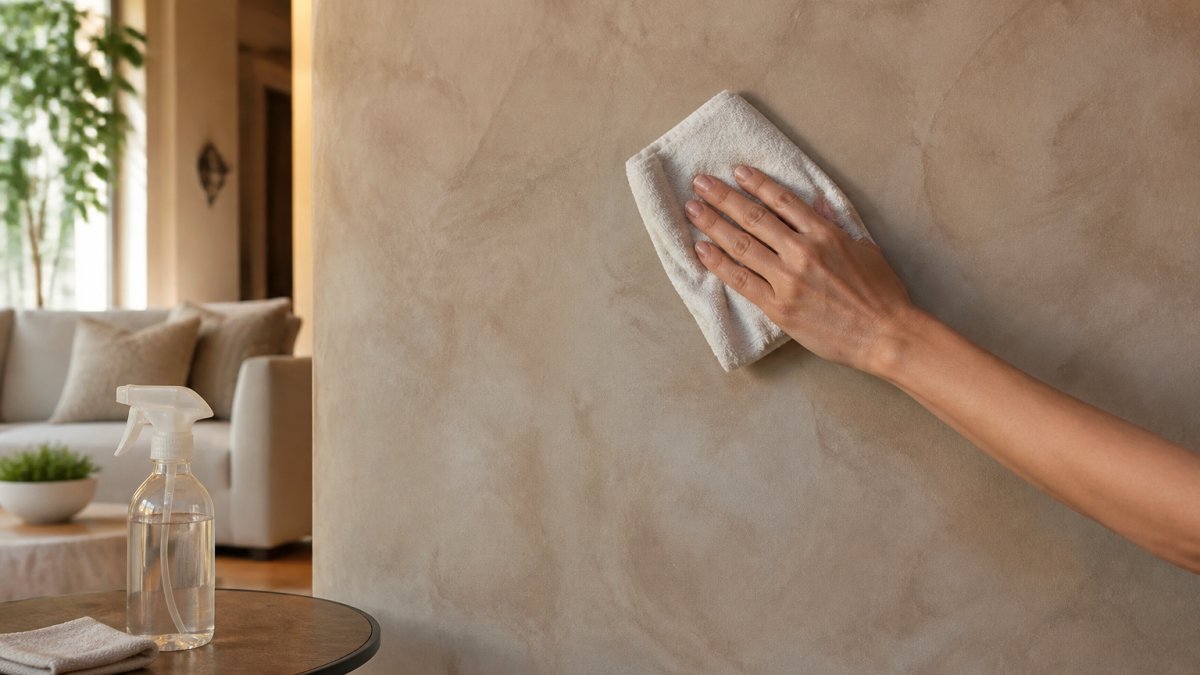
The safest method is dry first, damp second, and never wet. Dust sits on top of the finish, so lift it before you introduce any moisture. Wetting a dusty wall pushes grit into the surface and grinds it during wiping.
The Weekly Dust Routine
Dust once a week with a dry microfiber cloth or a soft duster. Work top to bottom in slow, overlapping passes. Use a horsehair brush on textured or mottled areas where cloth fibers snag. This routine takes a few minutes per wall and prevents the buildup that forces harder cleaning later.
Spot Cleaning High-Touch Areas
High-traffic spots like switch plates, door frames, and chair rails collect oils from hands. Dampen a microfiber cloth with diluted pH-neutral soap, wring it nearly dry, and blot the area. Do not scrub. Rinse with a second cloth dampened with plain water, then dry immediately with a clean towel. Water left standing can leave a ring in the lime.
What Cleaners Are Safe for Venetian Plaster (and What to Avoid)
Safe cleaners for Venetian plaster are pH-neutral, mild, and free of abrasives. Look for a gentle dish soap or a stone-safe cleaner diluted in warm water. Apply with a barely damp cloth and buff dry right after.
Avoid these entirely:
- Vinegar, lemon juice, and other acids, which etch lime
- Bleach and ammonia-based sprays, which strip wax and stain
- Powdered cleansers and scouring pads, which scratch the burnish
- Oil-based polishes, which trap dirt and yellow over time
A simple rule: if the label warns about porous surfaces, keep it off the wall. The EPA Safer Choice product database lists cleaners screened for milder ingredients, which is a useful starting filter.
How to Remove Stains from Venetian Plaster Without Damaging the Surface
Match the treatment to the stain, and start with the gentlest option. Most marks lift with a soft eraser or a barely damp cloth. Harsher methods should be a last resort, and always test in a hidden corner first.
Matching the Treatment to the Stain
| Stain Type | First Try | If That Fails |
|---|---|---|
| Dust and soot | Dry microfiber cloth | Soft horsehair brush |
| Fingerprints and oils | Diluted pH-neutral soap | Stone-safe degreaser |
| Pencil or scuff marks | White art eraser, light pressure | Damp cloth with mild soap |
| Water rings | Hairdryer on low, moving air | Re-burnish by a pro |
| Ink or dye | Do not DIY | Call a plaster specialist |
For anything in the bottom row, stop. Solvents can pull color out of the lime and leave a permanent light patch. A specialist can often re-burnish or spot-refinish the area instead.
Venetian Plaster Repair: Fixing Cracks, Chips, and Worn Patches
Small hairline cracks and minor chips are repairable, but the fix must match the original mix and sheen. Venetian plaster repair means filling with a compatible lime-based compound, then re-burnishing so the patch blends into the surrounding finish.
Here is how we approach it:
- Hairline cracks: widen slightly, fill with lime putty, and press flat while damp
- Chips: build up in thin layers, letting each dry before the next
- Worn or dull patches: re-burnish with a trowel, then reapply wax if the finish was waxed
- Water damage or soft spots: investigate the source before any cosmetic repair
Watch out: painting over a patch with wall paint is the most common mistake we see. It reads as a flat rectangle against the sheen and cannot be undone without refinishing the whole wall. If you would rather not risk it, a professional plaster specialist can assess and repair the finish. Mural Art Services also covers faux finishes and Venetian plaster.
Scheduling a Maintenance Assessment for Your Bay Area Property
A maintenance assessment is a walkthrough where a specialist checks sheen, cracks, and wear, then recommends a care plan. You can learn more About NuArts Production before booking.
For a maintenance assessment, contact the NuArts team through the website to discuss your property and schedule a visit.
Frequently Asked Questions
Can you use water to clean Venetian plaster?
A lightly damp cloth is fine for routine cleaning, but standing water is not. Wring the cloth until it is barely moist, wipe the surface, and dry it immediately with a second cloth. Water that sits on the wall can work into hairline cracks and loosen the finish over time. For anything beyond light dust and smudges, use a pH-neutral cleaner rather than plain water alone, and blot rather than scrub.
Does Venetian plaster need to be sealed or waxed?
Most interior Venetian plaster finishes benefit from a sealer or wax coat, and many installers apply one as the final step. That protective layer is what makes routine cleaning easy and helps block stains from setting in. Over years of cleaning, the wax layer thins, so it needs refreshing. Ask your installer which product was used so you reapply the same one rather than mixing incompatible finishes.
Can damaged Venetian plaster be repaired without redoing the whole wall?
In most cases, yes. Small cracks, chips, and scuffed patches can be filled and re-burnished so they blend into the surrounding surface. The key is matching the original plaster color and sheen, which is why it helps to keep a small sample or the product details from the original installation. Larger areas of delamination or repeated cracking in the same spot usually point to a substrate problem that needs attention before patching.
How often should Venetian plaster walls be maintained?
Plan on dusting every week or two and spot cleaning as needed. A deeper clean and a fresh wax or sealer coat every one to three years keeps the finish looking its best, depending on foot traffic and how often the wall is touched. Commercial spaces with high traffic, such as restaurant entries or hotel corridors, usually need the deeper cycle more often than a quiet residential hallway.
Maintaining Venetian plaster is mostly about restraint: gentle products, dry cloths, and knowing when to stop. NuArts brings custom hand-painted murals, faux finishes, and Venetian plaster expertise to homes and businesses throughout South San Francisco. Get started with NuArts and keep your plaster looking as sharp as the day it cured.