 how-to
Will a Custom Mural Hold Up in a Busy Commercial Space?
Last Updated: October 29, 2026
Quick Summary
Custom mural durability in commercial spaces depends on the paint system, the wall, and how heavily the space is used. Lobbies, entry walls, and restaurant walls take the most wear, while quiet office murals can stay fresh for years. Proper wall prep and a repair plan matter as much as the artwork itself.
- Lobbies and entry walls take the most contact and wear.
- Dust and cleaning chemicals are the main threats to a mural's finish.
- Paint or vinyl on an unprepared, dusty, or damp wall can peel or bubble.
- Coatings make routine cleaning safer and reduce everyday damage, but do not make a mural indestructible.
- Inspect edges, seams, and door-adjacent zones quarterly to catch early lifting.
Table of Contents
- How Long a Custom Mural Lasts in a High-Traffic Commercial Space
- Choosing an Acrylic Wall Mural or Commercial Mural Paint for Durability
- How a Mural Protective Coating Extends Mural Life
- Wall Mural Maintenance and Wall Prep That Prevents Failure, and Your Next Step With NuArts
- Frequently Asked Questions
How Long a Custom Mural Lasts in a High-Traffic Commercial Space
Custom mural durability in commercial spaces depends on three things: the paint system, the wall, and how the space gets used. A quiet office mural can look fresh for years; a busy hotel lobby may show wear sooner. Our commercial mural examples and services are built for business settings like these. Custom mural durability starts with how heavily a wall will be handled.
The biggest threats are scuffs, scratches, handprints near doors, and cleaning chemicals. Plan for these from the start.
- Lobbies and entry walls take the most contact
- Restaurant walls face grease and frequent wiping
- Corridors see rolling carts and bumps
- Office walls mostly see daily cleaning
Lifespan depends on materials, finish, and wall preparation.
Choosing an Acrylic Wall Mural or Commercial Mural Paint for Durability
Material and finish choices drive much of a mural's wear performance. Ask your provider about the materials and finishes used for your project.
-
Printed commercial-grade vinyl (cast film): Sharp graphics on wide, flat, smooth surfaces. Durability depends on film quality, laminate, and surface prep.
-
Wall wrap or wallcovering systems: Useful for large flat walls and temporary branding. Check the manufacturer's rated indoor lifespan and whether panels can be replaced individually.
-
Abrasion and scrub resistance: Ask for the coating or laminate's scrub-resistance rating and whether it suits high-traffic commercial use.
-
Cleanability: Confirm which cleaners are safe and which will dull or dissolve the finish.
-
Fade resistance: In sunlit areas, ask about ink lightfastness and whether a UV-blocking laminate or coating is specified.
-
Repairability: Painted murals can usually be touched up; vinyl is typically replaced by panel. Match the repair approach to your maintenance budget.
-
Substrate compatibility: Smooth, sealed, cured walls hold paint and vinyl better than dusty, glossy, or freshly painted surfaces.
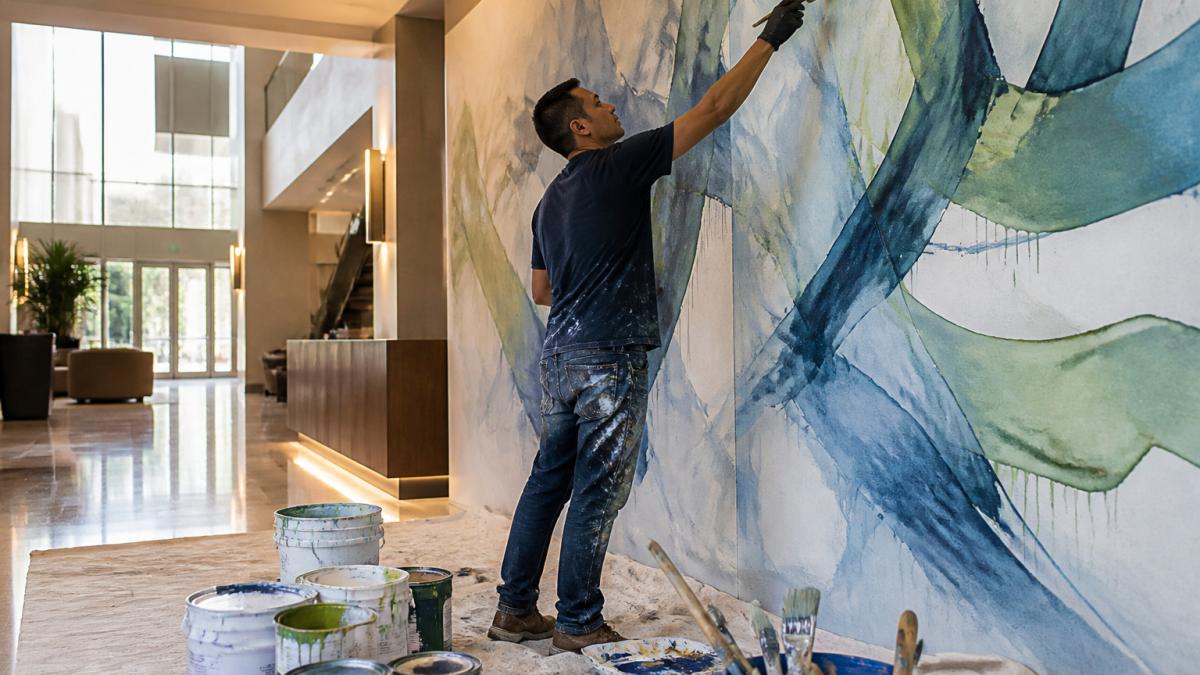
How a Mural Protective Coating Extends Mural Life
Coatings do not make a mural indestructible; they make routine cleaning safer and reduce everyday damage. Reapply as the manufacturer recommends.
Wall Mural Maintenance and Wall Prep That Prevents Failure, and Your Next Step With NuArts
Mural failures often trace back to prep and installation, not the artwork. A durability plan should cover wall preparation, cleaning by surface and stain type, and a repair-and-replacement path.
Wall prep that prevents peeling and bubbling
- Repair cracks, holes, and water damage, then let patched areas cure fully.
- Wash the wall to remove dust, grease, and residue; dust is a common cause of adhesion failure.
- Prime with a product compatible with the chosen paint or vinyl adhesive, and confirm the wall is dry before installation.
- Check moisture, damp drywall or masonry can cause bubbling and mold behind vinyl or paint.
- For vinyl, confirm the surface is smooth and sealed; for paint, confirm the primer is fully cured before topcoating.
- Plan seams on flat, low-visibility areas and allow proper curing before cleaning.
Cleaning by surface and stain type
- Painted and sealed murals: Dust with a soft microfiber cloth. For fingerprints, use mild soap-and-water on a damp cloth, then dry. Test any cleaner on a hidden spot first.
- Vinyl with laminate: Wipe with a non-abrasive cleaner recommended by the laminate manufacturer. Avoid abrasive pads, scouring powders, and solvents that dull or dissolve the finish.
- Grease (restaurant walls): Use a degreaser approved for the coating, applied to a cloth rather than sprayed directly, and rinse with clean water.
- Ink, marker, or scuff marks: Start with the mildest method; stronger solvents can lift the print or coating.
- Sunlit walls: Dust more often, dust plus UV exposure accelerates dulling.
Repair and lifecycle planning
- Keep a touch-up kit of matching paint or a spare vinyl panel for high-contact areas.
- Inspect edges, seams, and door-adjacent zones quarterly; early lifting is easier to fix than full replacement.
- Budget for partial panel replacement on vinyl and spot repainting on painted murals rather than a full redo.
- Ask for the manufacturer's warranty terms, abrasion, fading, and adhesion are often handled differently.
If you want a mural built for busy use, explore our wall mural options. Our mural art services cover custom designs and finishes for business spaces. When you are ready to talk through your project, contact NuArts for a custom mural quote.
The article lays out the main upkeep steps for keeping a commercial mural in good shape.
| Task | Timing | Note |
|---|---|---|
| Inspect edges, seams, and door-adjacent zones | Quarterly | Early lifting is easier to fix than full replacement |
| Dust painted and sealed murals | Routine | Use a soft microfiber cloth |
| Dust sunlit walls more often | More often than shaded walls | Dust plus UV exposure accelerates dulling |
| Keep a touch-up kit | Ongoing | Matching paint or spare vinyl panel for high-contact areas |
| Cure patched areas fully | Before installation | Repaired cracks, holes, and water damage |
Frequently Asked Questions
How long does a hand-painted mural last in a commercial space?
A well-prepared, professionally sealed mural in a commercial space can last many years, but high-traffic areas wear it faster than quiet offices. Lifespan depends on the paint system, the quality of the protective coating, the wall surface, and how often the mural is cleaned and touched up. Ask your mural provider for a written description of the materials and coatings used, and plan a periodic inspection so small scuffs and fading are addressed before they spread. For current pricing and a durability assessment of your specific space, contact NuArts directly for a quote.
Can a mural be cleaned without damaging the paint?
Most sealed murals can be cleaned with a soft cloth and a mild, pH-neutral cleaner diluted in water, wiped gently in one direction. Avoid abrasive pads, harsh solvents and strong degreasers, which can dull or lift a protective finish. Test any cleaner on a small hidden area first. Fingerprints and light scuffs usually come off easily, while stubborn marks may call for a professional touch-up rather than aggressive scrubbing. Your mural provider should give you cleaning guidance specific to the finish they applied.
Does wall preparation affect mural durability?
Yes. A mural bonds only as well as the surface beneath it. Dust, grease, moisture and poorly sealed or flaking substrates can cause paint to peel or cracks to form within months. Proper preparation includes cleaning, repairing damage, priming, and confirming the wall is dry and sound before any paint goes on. Ask your provider how they assess and prepare the wall, because good preparation is one of the most reliable ways to prevent failure.