 how-to
How Do Professional Faux Finish Consultations Work?
Last Updated: November 6, 2026
Quick Summary
A professional faux finish consultation is a structured planning meeting where a decorative painter learns what you want a space to feel like and translates that goal into specific finishes and a realistic scope of work. The process includes a site walk, a goal discussion, a finish recommendation, sample review, and a written estimate.
- Consultations begin with a site walk that reviews wall and ceiling conditions and existing paint.
- Gather room photos, inspiration images, and wall measurements before the meeting.
- Ask for sample boards applied to a substrate similar to yours, at least two per finish.
- View samples at the times of day the room is actually used, since light shifts color and sheen.
- Match finish durability to traffic level, especially for high-contact retail walls.
Table of Contents
- What Happens in a Faux Finish Consultation
- Preparing for Your Meeting: What to Gather and Decide First
- Reviewing Finish Samples and Color Matching
- Choosing Finishes for Commercial and Retail Spaces
- Booking Your Consultation with NuArts in South San Francisco
- Frequently Asked Questions
What Happens in a Faux Finish Consultation
A professional faux finish consultation is a structured planning meeting where a decorative painter learns what you want a space to feel like, then translates that goal into specific finishes, colors, and a realistic scope of work.
Many clients come in with a single image they love and little sense of how it will look on their own walls. The consultation turns that inspiration into a plan.
A typical consultation follows a clear sequence:
- Site walk: The painter reviews wall and ceiling conditions, existing paint, cracks, and surface materials.
- Goal discussion: You describe the mood, style, and how the space will be used day to day.
- Finish recommendation: The painter proposes one or more finish types suited to the surface and your goals.
Each step builds on the last. Skipping the site walk, for example, often leads to revisions once the painter discovers problems behind the paint.
Preparing for Your Meeting: What to Gather and Decide First
Preparation makes the consultation faster and more useful. You do not need final answers, but a few materials and decisions will help the painter give you a precise recommendation.
Gather these items before the meeting:
- Photos of the room from several angles, taken in daylight
- Inspiration images you like, and a short note on what you like about each
- Measurements of the walls or ceilings to be finished
Decide these questions in advance:
- Which surfaces matter most? Feature walls, ceilings, and columns each carry different visual weight.
- How much change do you want? A subtle texture reads differently from a bold, multi-tone finish.
- What is your timeline? Some finishes require several drying and sealing stages.
A common mistake is bringing too many inspiration photos without a clear preference. Ask yourself which two or three images you would choose if you had to pick now. That narrows the discussion and gives the painter a clear starting point.
Reviewing Finish Samples and Color Matching
Reviewing samples is where expectations get tested against reality. A finish that looks striking in a photo can look flat or heavy on your actual wall, so physical samples matter. This is also the stage where you choose among finish families, and the choice should follow a decision framework rather than a gut reaction to a single image.
A decision framework for finish families
Most decorative painters work in a handful of finish families. Each behaves differently on a wall, under light, and over time:
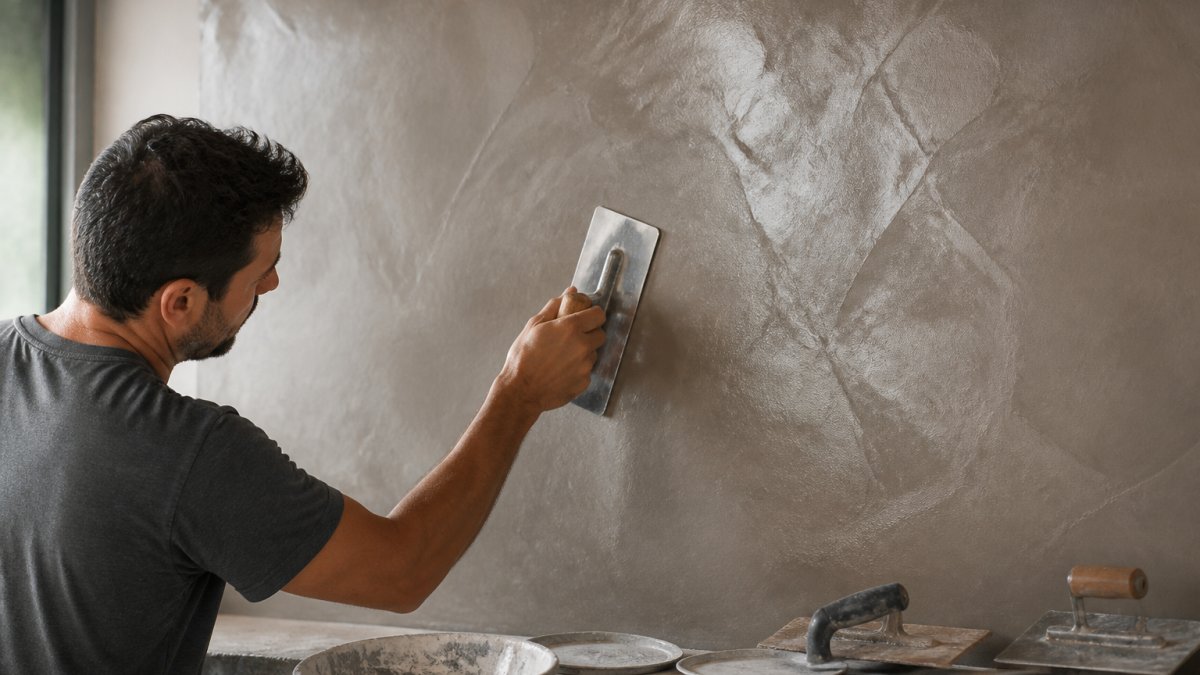
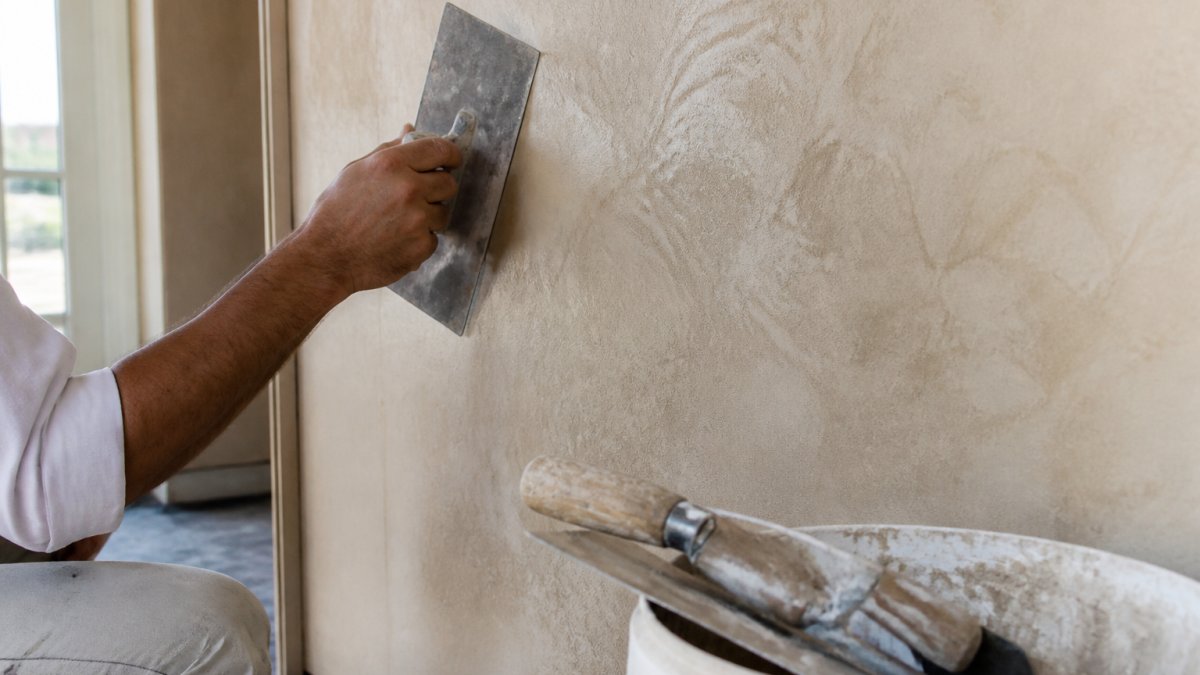
- Decorative plaster (Venetian plaster and similar): Troweled lime- or gypsum-based finishes with depth and movement. Best for feature walls, lobbies, and reception areas where a refined, tactile surface supports the design. Higher labor intensity and a longer application schedule than paint.
- Glaze and layered washes: Translucent layers that create soft mottling, aged effects, or color depth. Suited to dining rooms, bedrooms, and hospitality interiors where a subtler mood is wanted. Sheen and layering make them sensitive to lighting direction.
- Stone-like and textured finishes: Applied coatings that mimic limestone, travertine, or concrete. Useful in retail and commercial settings where a durable, distinctive backdrop is needed without the cost and weight of real stone.
- Metallic finishes: Mica, pearlescent, or metallic glazes that shift appearance with viewing angle. Strong in accent areas and brand-driven retail interiors, but they amplify surface imperfections and require careful sample review.
Match the family to the room's use first, then to style. A high-traffic commercial wall and a low-traffic bedroom call for different durability and sheen, even if the inspiration photo is the same.
How to review sample boards properly
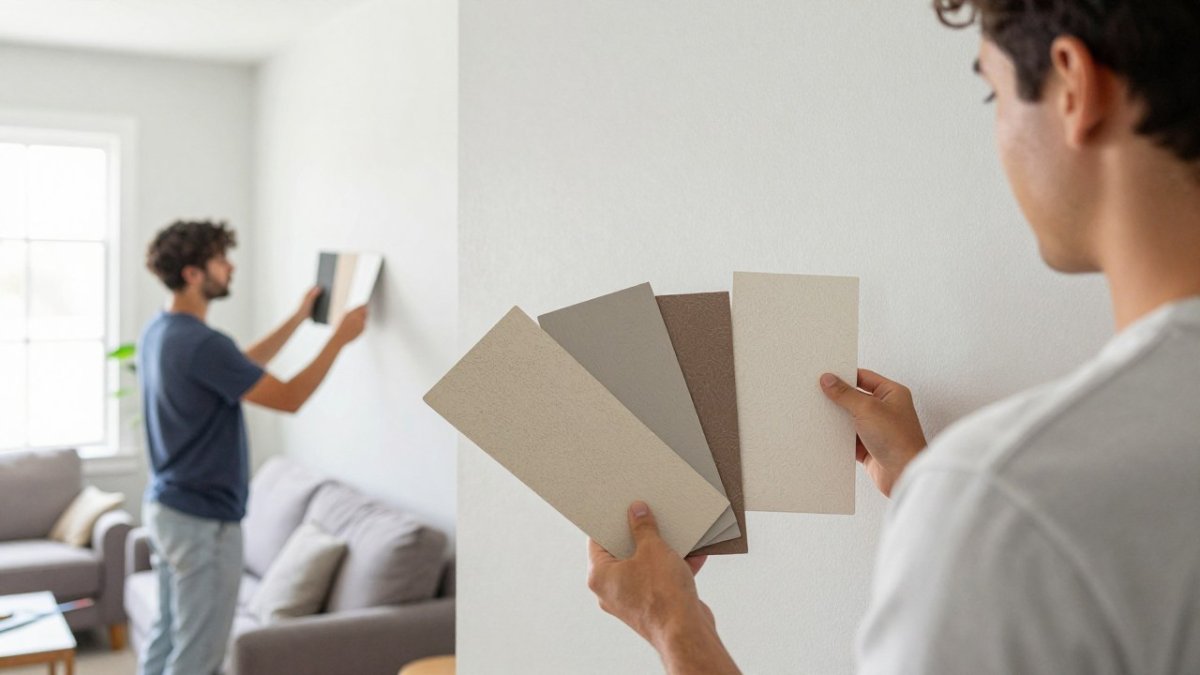
Ask to see sample boards applied to a substrate similar to yours, not just paper swatches. A board on primed drywall behaves differently from one on plaster or previously painted trim.
View the boards at the times of day the room is actually used. Daylight, warm lamps, and shadows shift color and sheen noticeably, and metallic or glaze-based finishes can change appearance depending on the angle you view them from.
From sample to written approval
A test patch lets you judge the finish in your actual lighting and on your actual substrate, and it is the fairest way to compare two close candidates.
Color matching caveats
Color matching deserves particular attention when the finish must sit beside existing materials. Bring the reference items to the meeting or send clear photos, and ask the painter to note any known limits, such as a glaze that cannot be matched exactly to a fabric dye lot. For commercial projects, confirm the brand color reference in writing so future touch-ups stay consistent.
Choosing Finishes for Commercial and Retail Spaces
Commercial and retail spaces face different demands than homes. Foot traffic, cleaning routines, brand consistency, and the need to make a strong first impression all shape the right choice of finish. In South San Francisco, the mix of property types also shapes what a consultation should cover.
South San Francisco property types and what they need
South San Francisco spans a range of building stock, and the finish strategy should follow the property type:
- Retail storefronts and boutiques: Feature walls and cash-wrap backdrops in stone-like or textured finishes that support merchandise without competing with it. Bright, directional retail lighting emphasizes texture, so samples must be tested under the actual fixtures.
- Hospitality and restaurant interiors: Layered glaze and plaster finishes in dining areas and reception zones, where a refined surface signals quality and holds up to cleaning.
- Office lobbies and reception areas: Venetian plaster and layered decorative finishes that read as durable and professional, with sheen chosen to hide scuffs from daily traffic.
- Mixed-use and light-industrial conversions: Surfaces that may include previously painted block, patchy drywall, or older plaster. The site walk matters more here because substrate condition drives preparation and cost.
Local scheduling and service-area questions
Ask how many visits the finish requires, since multi-stage plaster and glaze work can span several days with drying and sealing between coats.
Questions to ask a local provider
Use the consultation to evaluate the provider, not just the finish:
- Which finish families do you apply most often in commercial settings, and can I see completed local work?
- How do you protect fixtures, merchandise, and flooring during application?
- What is the cleaning and spot-repair routine for this finish, and how does it hold up in high-traffic areas?
- Can you provide a written scope that separates preparation, application, and sealing?
Matching finish to traffic and maintenance
Consider these factors for commercial projects:
- Traffic level: Heavily used walls near entrances or checkout areas need finishes that tolerate contact and cleaning.
- Maintenance plan: Ask how the finish should be cleaned and whether spot repairs are practical.
- Brand alignment: The finish should match the visual identity and the customer experience you want to create.
- Lighting: Retail lighting is often bright and directional, which can emphasize texture. Test samples under the actual fixtures.
Watch out: choosing a delicate finish for a high-contact retail wall is a common and expensive mismatch, because cleaning and abrasion wear show up faster than most owners expect.
For retail spaces, faux stone and textured finishes can create a distinctive backdrop that supports merchandise without competing with it.
The article compares the main consultation considerations for commercial and retail spaces, summarised below.
| Property type | Typical finish | Why it fits |
|---|---|---|
| Retail storefronts and boutiques | Stone-like or textured finishes | Supports merchandise without competing with it |
| Hospitality and restaurant interiors | Layered glaze and plaster | Signals quality and holds up to cleaning |
| Office lobbies and reception areas | Venetian plaster and layered finishes | Reads as durable and professional |
| Mixed-use and light-industrial conversions | Finish chosen after site walk | Substrate condition drives preparation and cost |
Booking Your Consultation with NuArts in South San Francisco
NuArts works with homeowners, hospitality operators, commercial developers, interior designers, and architects in the San Francisco Bay Area.
To schedule a consultation, contact NuArts Production and describe your space, the surfaces you want to finish, and your timeline. If you are still exploring options, view NuArts Production images to see completed work and judge the quality of finishes and color results before you meet.
For commercial and retail projects, review NuArts commercial work to see how finishes have been applied in business settings. You can also explore faux stone finishes for retail spaces to understand the design benefits in more detail.
Pricing depends on quantity, dates, and delivery. Current pricing details are available by requesting a quote directly. Browse NuArts mural and finish services to review the full range of offerings before scheduling.
Frequently Asked Questions
What happens during a faux finish consultation?
A faux finish consultation is a scoped planning meeting, usually on site, where the painter reviews the room, its lighting, wall and ceiling condition, and how the space is used. You discuss the look you want, examine sample boards, and agree on preparation steps and timing. Pricing depends on quantity, dates, and delivery, so request a quote from NuArts for current figures.
How do I choose the right faux finish for a commercial space?
Start with how the space is used. A retail floor with heavy foot traffic needs a finish that cleans easily and resists scuffs, while a lobby can carry more intricate texture. Bring photos of the room, your brand colors, and any fixtures or stone you need to match.
Can I see a sample of a faux finish before it is applied?
Yes. Sample testing is a standard part of a professional consultation. Ask for a test board or a small test area on an existing wall so you can see the finish under your actual lighting, at different times of day. Compare the sample against your fixtures and furnishings, and check how the texture reads from normal viewing distance. Approve the final sample in writing before the full project begins.
How much does professional faux finish painting cost?
Pricing depends on quantity, dates, and delivery. NuArts does not publish fixed rates here, so request a quote directly from NuArts for current pricing.