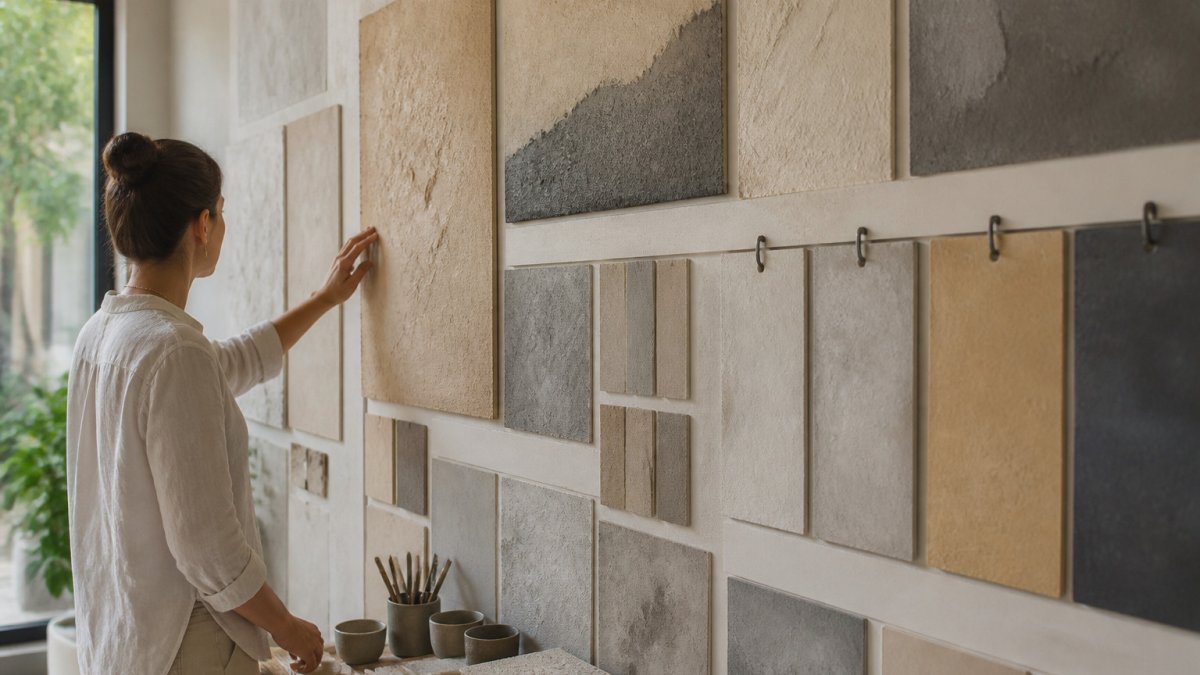
 blog
7 Bespoke Wall Works Alternatives for Designers to Specify
Last Updated: November 3, 2026
Quick Summary
The best bespoke wall works alternative for designers is a specification strategy, not a single product: custom wallcovering, digital mural wallcovering, hand-painted murals, and faux finishes each solve a different problem. The right pick depends on traffic, timeline, and budget, so match the option to your project's binding constraint.
- Custom wallcovering delivers repeatable panels across lobbies, corridors, and guest rooms without a single repaint.
- Substrate choice drives durability more than artwork, so check abrasion rating and backing compatibility first.
- Paint and stencils carry the lowest first cost but typically need touching up within a few years.
- Lock the design before production or paint begins, because revision flexibility drops sharply afterward.
- Document cleaning and repair instructions in the project manual and retain attic stock for panel systems.
Table of Contents
- Why Designers Need a Bespoke Wall Works Alternative
- Custom Wallcovering: The Specifier's Workhorse
- Digital Mural Wallcovering for Large-Scale Impact
- Hand-Painted Wall Murals: Where Artisanal Craft Still Wins
- Faux Finishes for Commercial Interiors That Take Abuse
- Comparing the Alternatives: Cost, Lead Time, and Lifecycle Value
- Specifying Bespoke Wall Works in South San Francisco Projects
- Book a Studio Consultation with NuArts
- Frequently Asked Questions
Why Designers Need a Bespoke Wall Works Alternative
The best bespoke wall works alternative for designers is a specification strategy, not a single product. Custom wallcovering, digital mural wallcovering, hand-painted murals, and faux finishes each solve a different problem, and the right pick depends on traffic, timeline, and budget. This guide breaks down seven options commonly specified for interior projects, with honest trade-offs for each.
A true bespoke wall work, a one-off commissioned piece built around a single space, delivers unmatched originality, but carries the longest lead time, the least mid-project flexibility, and the highest sensitivity to a client who changes their mind in week six. When a hotel opening date is fixed or a developer needs eight floors on one schedule, that trade-off stops making sense.
Custom wallcovering is a printed or fabricated wall surface made to a designer's specification, sized to the room and produced in repeatable panels. That definition reframes the decision: you are not choosing between art and no art, but how much of the process you control versus hand to a fabricator.
Below, we'll show how each alternative performs on cost, lead time, and lifecycle value. Durability, substrate compatibility, and revision flexibility decide whether a project succeeds.
Custom Wallcovering: The Specifier's Workhorse
Custom wallcovering is the default alternative for good reason: it delivers a designer's own artwork or pattern at scale, in panels, with predictable installation. American Society of Interior Designers resources on wallcovering specification points designers toward material and performance documentation before selection, which is the right first step.
Where it wins is repeatability. A pattern specified once can be produced across a lobby, a corridor, and twelve guest rooms without a single repaint. Where it loses is spontaneity. Once panels are printed, changes mean reprints.
Substrates, Backings, and Commercial Ratings
Substrate choice drives durability more than the artwork does. Ask three questions before you commit:
- What is the abrasion rating, and does it match the traffic pattern?
- Is the backing suitable for the wall substrate, drywall, plaster, or panel?
- How does the material handle humidity and condensation in bathrooms or kitchens?
Watch out: skipping a substrate compatibility check is the most common cause of adhesion failure, and it surfaces months after install.
Digital Mural Wallcovering for Large-Scale Impact
Digital mural wallcovering is large-format custom printing that turns a single image or illustration into a seamless wall-scale graphic.
For retail flagships and boutique hotel lobbies, one dramatic wall can carry significant brand presence.
Hand-Painted Wall Murals: Where Artisanal Craft Still Wins
Hand-painted wall murals offer visible human craftsmanship in every brushstroke, which suits boutique hotels and high-end residences.
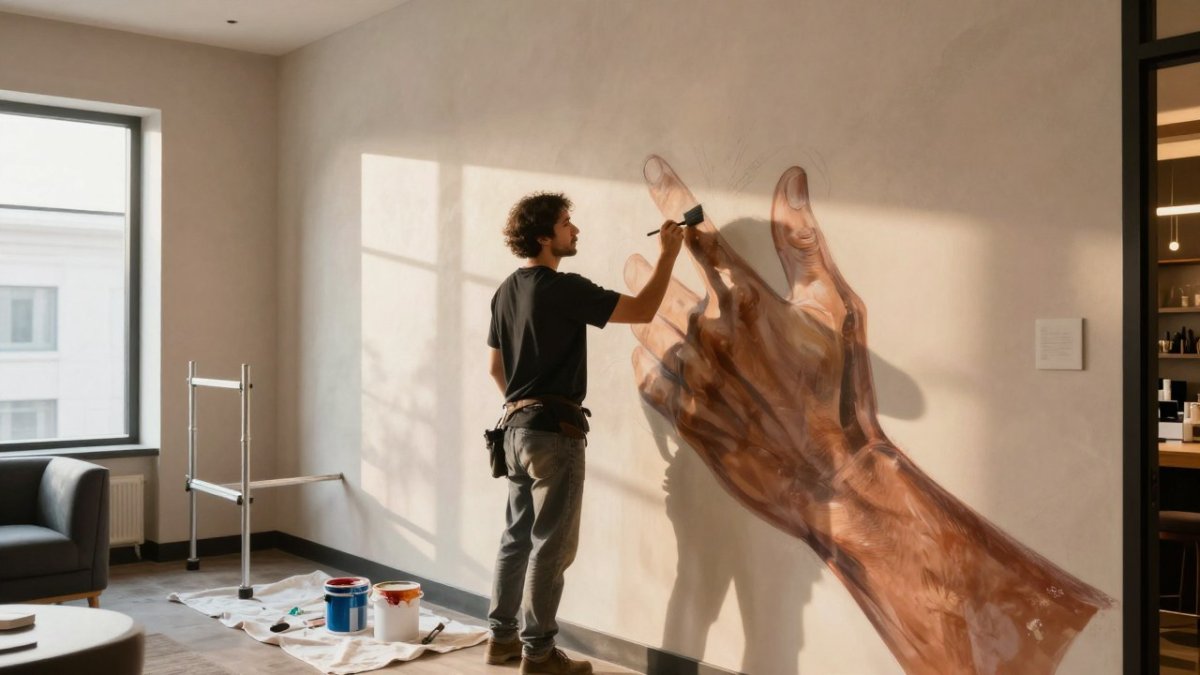
Designers who want to see the range of hand-painted and decorative work before specifying can explore wall murals and decorative paintings to understand what is achievable at this level of craft.
Best for: feature walls in hospitality and high-end residential work. Skip if: the schedule is tight or the design is still moving.
Faux Finishes for Commercial Interiors That Take Abuse
Faux finishes are hand-applied decorative treatments that mimic marble, stone, wood, and other motifs using paint and plaster techniques. For commercial interiors, they deliver the look of expensive material without the weight, cost, or fragility of the real thing.
Venetian plaster builds a polished, layered surface suited to architectural applications. Marble and stone motifs work well in reception areas and elevator lobbies where a solid slab would be impractical.
The honest caveat: quality depends entirely on the applicator's skill and surface preparation. Ask any finisher how they handle substrate prep and cure time before you sign off.
Designers weighing faux work against other decorative options can review faux finishes for marble, stone, and wood to compare motifs and applications.
Comparing the Alternatives: Cost, Lead Time, and Lifecycle Value
No single alternative wins on every axis. The table below summarizes how each generally performs so you can match the option to the project constraint that matters. Treat relative cost as a budgeting signal, not a quote: pricing depends on square footage, substrate prep, access equipment, and site conditions. For current pricing, contact NuArts directly.
| Alternative | Relative Cost | Typical Lead Time | Lifecycle Value | Best For |
|---|---|---|---|---|
| Custom wallcovering | Moderate | Medium | High, repeatable | Multi-room rollouts |
| Digital mural wallcovering | Moderate to high | Short | High visual impact | Retail, lobbies |
| Hand-painted murals | High | Long | Highest originality | Hospitality features |
| Faux finishes | Moderate to high | Medium | High durability | Commercial high-traffic |
| Fabric wall panels | Moderate | Medium | Acoustic plus softness | Offices, guest rooms |
| Paint and stencils | Low | Short | Lowest, needs refresh | Budget-conscious spaces |
| Shiplap and tin tile | Moderate | Medium | High, structural feel | Residential accents |
What Actually Drives the Cost
Paint and stencils are the lowest first-cost option, and the lifecycle math is where they lose. A stenciled or painted feature in a high-traffic corridor typically needs touching up within a few years, and each refresh carries labor and access costs. A durable commercial wallcovering or cured faux finish installed once often costs less over a decade even though the first invoice is higher.
Lead Time Is a Scheduling Problem, Not a Number
Lead time is the sum of design approval, sampling, production or on-site work, and installation.
Maintenance and Replacement
Ask each vendor how the surface is cleaned and how damage is repaired before you specify, and document those answers in the project manual.
Specifying Bespoke Wall Works in South San Francisco Projects
Local specification depends on the building and site. Humidity, schedule, and access rules can each shape material selection and the installation plan.
A Designer's Specification Workflow for South San Francisco
For designers sourcing custom wall finishes, the practical workflow looks like this:
- Confirm the wall substrate and traffic rating for each space. Drywall, plaster, and panel substrates behave differently under wallcovering and faux finish, and the substrate check belongs in the specification, not the installer's scope.
- Shortlist two alternatives that fit the schedule and budget, and request a physical sample at true scale in the actual lighting before the client sees a rendering.
- Lock the design before production or paint begins. Revision flexibility drops sharply once panels are printed or the first coat of plaster is on the wall.
- Coordinate installation around other trades, not after them. Wall finishes are among the last trades in and the first to be damaged by others.
- Document cleaning and repair instructions in the project manual, and retain attic stock for panel-based systems.
Commercial Performance and Compliance
For hospitality, workplace, and tenant-improvement projects, the specification must answer questions beyond appearance. Fire performance comes first: commercial wallcoverings and panel systems are typically tested and classified for flame spread and smoke development, and the classification should be documented in the submittal rather than assumed. Cleanability and abrasion resistance matter in corridors, elevator lobbies, and reception areas. Indoor air quality is a third: low-VOC adhesives and finishes are commonly requested on workplace projects, and the adhesive is often the larger contributor, so specify it explicitly.
Local Logistics and Project Support
South San Francisco projects involve practical constraints that national product pages ignore. Site measurement should happen after framing and drywall are complete but before finish schedules are locked, because field dimensions rarely match plan dimensions. Shipping and staging need a plan: wallcovering and panel shipments are heavy and moisture-sensitive, and a job site without secure, dry storage is a real risk in a coastal climate. Confirm who is responsible for wall prep, who supplies the adhesive, and who handles punch-list touch-ups, because those responsibilities are frequently split between the printer, the installer, and the general contractor.
Designers who want the full service picture can see our mural art services, which cover murals, faux finishes, and Venetian plaster, or contact NuArts Production to discuss a specification.
Book a Studio Consultation with NuArts
Choosing between these alternatives is easier with a second set of eyes on the actual space. NuArts offers custom hand-painted murals, faux finishes, and Venetian plaster. Contact NuArts Production to discuss your project.
Frequently Asked Questions
What is the difference between custom wallcovering and a hand-painted mural?
Hand-painted wall murals are applied directly to the wall by an artist, so every section is unique. NuArts offers custom hand-painted murals for homes and businesses.
Are digital mural wallcoverings suitable for commercial interiors?
Yes, when specified correctly. Commercial-grade digital mural wallcovering uses Type II vinyl or heavy textile backings rated for high-traffic spaces, and it can carry Class A fire ratings required in many US commercial interiors. The key is matching the substrate to the location: corridors and lobbies need scuff-resistant vinyl, while guest rooms can use softer textile-backed options. Confirm the fire rating and cleaning method with the fabricator before you sign off on the spec.
How do faux finishes for commercial interiors hold up under heavy use?
Durability depends on the system, not just the look. Ask the installer how the finish handles humidity and condensation, especially near entries and restrooms, and request a sample panel to test cleaning before full installation.
What should designers ask before commissioning a bespoke wall works alternative?
Ask for a portfolio of comparable spaces, a sample panel or mock-up, and written details on substrate, fire rating, and topcoat. Ask about the revision process and the warranty, and get the lead time in writing. [Contact NuArts](page:5) for current terms.
The hardest part of specification isn't picking a finish. It's committing before the design stops moving. NuArts helps designers resolve that tension early, with tailored services built around each project's specific needs, from custom hand-painted murals to faux finishes and Venetian plaster for high-end commercial and residential spaces. Get started with NuArts and specify a wall treatment that holds up as well as it looks.
